"Who do you say that I am?"
Come and see a full-scale reproduction of Christianity's most studied relic, on display at St Leonard's Church, Bridgnorth, with panels tracing its history, the science that has examined it, and the debate it continues to inspire. Is this the image of Jesus Christ of Nazareth?
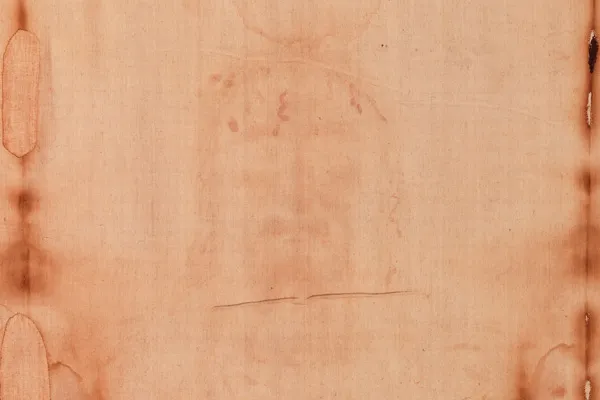
In 1898, amateur photographer Secondo Pia took the first photograph of the Shroud and discovered, in his darkroom, that the negative plate showed a startlingly clear, three-dimensional human figure — sharper than the cloth itself appeared to the naked eye. That single discovery launched more than a century of scientific inquiry that continues today.
This exhibition presents a full-size, faithfully reproduced replica of the Shroud alongside a series of information panels, drawing on historical, forensic, and theological research to explore what is known, what remains uncertain, and why the image continues to hold such significance.
Despite modern technology, no one has managed to reproduce the Shroud's image — "it's a total mystery," as one researcher put it. — The Telegraph, April 2024
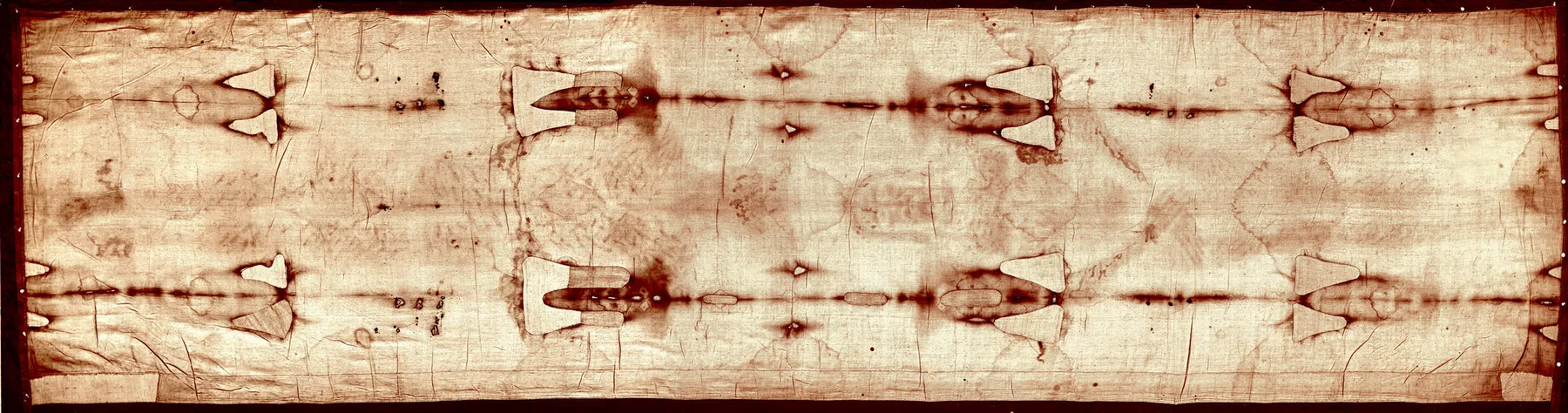
The Shroud measures roughly 14 feet by 3.5 feet. The front and back images of the body appear head to head along the centre line — the pattern the cloth would take if laid over a body and folded from the feet, up over the head, and back down.
The exhibition opens with a talk by Pam Moon — researcher, author and educator with the British Society for the Turin Shroud — who will present the exhibition and its central questions.
Expect the evening to sit somewhere between lecture and reflection: how could an image have formed on the cloth without paint, dye, or brushstroke? What do the markings recorded on the fabric appear to show, and how does that align with the Gospel accounts of the Passion? Why, after more than a century of laboratory examination, does the Shroud still resist a settled explanation? For visitors of faith, the aim isn't to resolve every question with certainty, but to offer something steadier — a sense that the mystery itself can deepen devotion rather than unsettle it, and that standing before the image can be as much an act of reflection as of inquiry.
Places limited, early booking recommended.
Book Your PlaceAlongside the full-size replica, a series of information panels walks through the Shroud's history, the science that has examined it, and the questions that remain unresolved. The panels are part of what makes the visit worth the trip — so we're leaving the detail for the exhibition itself.
For many who come to see it, the image carries a weight beyond the historical and scientific debate. To those who believe the cloth once wrapped the body of Jesus after the crucifixion, standing before it can be a profoundly moving experience — a tangible link to the Passion story that has drawn pilgrims, deepened faith, and offered comfort and hope to visitors for generations.
Find out about many of the details that appear on the image on the Shroud, from the placement of nails used in the crucifixion of this man to the appearance of real blood stains.
Centuries of documented custody, long before the cloth ever reached Turin.
What one 19th-century photograph revealed — and why no one expected it.
Decades of laboratory examination, with results that still divide experts today. Learn about the 1988 carbon dating controversy that led to the Shroud being ignored for decades, and the new information that calls into question the efficacy of the dating.
What pathologists have observed in the image, and what it might mean. Experts in forensic medicine—such as Dr. Robert Bucklin and Dr. Frederick Zugibe—have treated the image and bloodstains on the cloth like a modern crime scene.
Why the Church has always treated the Shroud as an invitation, not a verdict. As such, come prepared to be moved emotionally and spiritually.
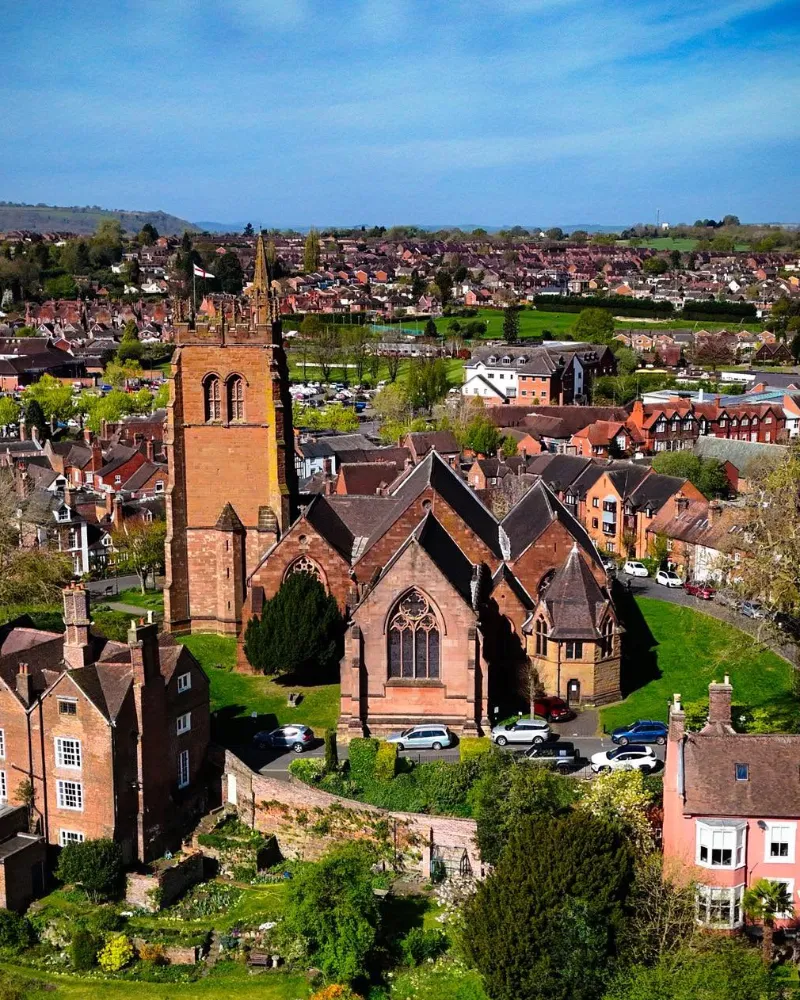
St Leonard's Church, Bridgnorth
Photo: VGJ Drone Photography